- Money254 Money Weekly
- Posts
- New Fine for Schools Overcharging Fees, Treasury Admits Breach Over Ksh207.7B Loan
New Fine for Schools Overcharging Fees, Treasury Admits Breach Over Ksh207.7B Loan
Govt proposes to fine principals overcharging school fees Ksh1 million. Treasury uses Ksh207.7 billion in loans to pay salaries and repay debt, contrary to the law. Parents to be allowed to save directly for their children’s future university and college fees under the new funding model. Cyber cafés to begin recording customer ID numbers under new CA rules. All these stories are in today’s Money Weekly Newsletter. But first, here’s what the new Bill says about the overcharging of school fees.

Washington Mito
August 14, 2026

Hello and welcome to the Money Weekly Newsletter, where we cover the new Bill that introduces fines for school heads overcharging fees.
Grow Your Wealth with the SanlamAllianz Balanced Fund or Fixed Income Fund
Looking for strong returns without taking on excessive risk? Money254 has partnered with SanlamAllianz Investments Limited, which offers two investment options: the SanlamAllianz Balanced Fund, which delivered 32.3% in returns last year, and the SanlamAllianz Fixed Income Fund, which returned 21.6% in 2025.
Start investing with as little as Ksh2,500, then top up from Ksh1,000 per transaction. You'll also enjoy quarterly interest payouts and one free withdrawal every month.
Ready to start growing your wealth? Sign up for the Balanced Fund here or the Fixed Fund here.

New Fine for School Heads Overcharging Fees
Public school heads who charge extra fees could face a fine of up to Ksh1 million, imprisonment for up to three years, or both under the proposed Basic Education Bill 2026 currently before Parliament.
The government-sponsored Bill states that public schools will only be allowed to impose additional charges after getting approval from the serving Education CS.
The Bill states that any person who contravenes the rule commits an offence punishable by a fine not exceeding Ksh1 million, a prison term of up to three years, or both.
Meanwhile, parents and guardians will also have a legal duty to enrol their children in school. Failure to do so could attract a fine of up to Ksh100,000, imprisonment for up to two years, or both.
Additionally, the proposed law, if passed, will bar public schools from administering admission tests or denying admission because a child lacks proof of age.
The Bill further abolishes corporal punishment and any cruel, inhuman or degrading treatment. Violators would face a fine of up to Ksh100,000, six months in prison, or both.
“Any learner admitted in a school shall not be barred from transitioning to the next level,” read part of the Bill in part.
At the same time, through the Kenya National Educational Assessments Council Bill of 2026, the government is proposing to scrap KNEC and replace it with the Kenya National Educational Assessments Council (KNEAC).
The new body will oversee national assessments and issue certificates and diplomas.
The Bill further states that once KNEAC issues a certificate or diploma, no person or institution will be allowed to withhold it from the candidate, with offenders facing a fine of up to Ksh200,000, imprisonment for up to one year, or both.
The Bill also proposes tougher penalties for exam malpractice, with students found guilty facing a ban of up to 3 years.
Here is a quick recap of the top news stories for the week:
Treasury has admitted borrowing Ksh207.7 billion to pay salaries, debt repayments and other recurrent expenses in the year ended June, despite the law requiring borrowing to mainly finance development projects. Draft Treasury documents show total borrowing of Ksh983.7 billion in 2025/26, with Ksh776 billion allocated to development and Ksh207.7 billion to recurrent spending. This means 21.1% of borrowed funds went to the ordinary running of government rather than projects such as roads, schools and hospitals. Treasury said it will seek compliance with the Public Finance Management Act in future budgets.
Parents could soon be allowed to save directly for their children’s future university and college fees under the proposed Tertiary Education Placement and Funding Bill, 2026. The Bill would empower the new Tertiary Education Funding Authority to establish a savings scheme that can receive deposits for a specific child’s tertiary education. However, the proposed law does not yet spell out contribution limits, returns, withdrawal rules or fund management. It also introduces tougher student loan recovery measures, including a 5% monthly penalty for employers who fail to deduct and remit loan repayments on time.
Taxpayers challenging KRA assessments now face a higher evidential burden after the High Court ruled that supporting documents must be clearly indexed, reconciled and arranged chronologically. The court said KRA is not required to act as a forensic accountant and that submitting unstructured records does not amount to compliance. The ruling overturned a 2023 Tax Appeals Tribunal decision that had cancelled a Ksh29.21 million assessment against Jakoline Enterprises Ltd. The judgment is expected to push businesses to maintain better organised tax records.
Cyber cafés in Kenya will be required to register customers, record their names, ID numbers, the computer used, and login and logout times, and keep the records for at least three years under new Communications Authority regulations aimed at curbing cybercrime. Operators must also issue receipts, install software to block illegal websites and scan web traffic, and allow CA officers access to records during investigations. Businesses that fail to comply risk fines of at least Ksh500,000, service suspension, or closure by the regulator.
Catch Up on More News and Money Tips

%20(1).jpg)
MONEY254 #MONEYTOK
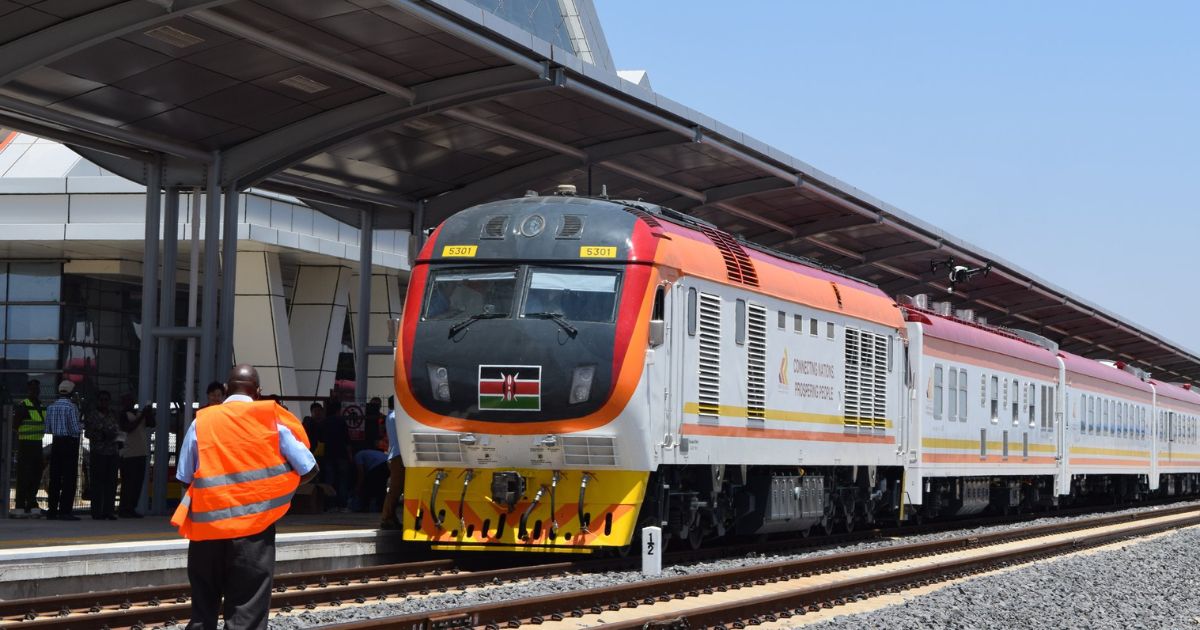
25 Proposed Stations in Nairobi's Ksh1 Trillion Underground Railway Project
The government has earmarked 25 locations that will serve as stations for a mass transit system featuring an underground railway through the CBD, connecting to the existing railway network serving Eastlands.
The 10-kilometre underground line will have stops at Upper Hill, KNH, Parliament, City Hall, Kenyatta Avenue, Muthurwa, University Way, Museum Hill, Westlands and Sarit Centre.
It will connect to Eastlands lines covering Jericho, Buruburu, Donholm, Umoja, Kayole, Komarock, Eastleigh, Kariobangi, Dandora, Savannah, Fedha and Embakasi. Construction is expected to start in 2028, with operations targeted to begin in 2034.
Watch the video to learn more.
@money254hq 25 Proposed Stations in Nairobi's Ksh1 Trillion Underground Railway Project The government has earmarked 25 locations that will serve as s... See more
That’s a wrap for this week’s Money Weekly!
Remember that we can help you compare over 300 loans, savings accounts, current accounts, and more on our website if you’re thinking about your next product.
❤️ Share with a friend
Thanks for reading. If you liked this week’s Wallet Wellness email, we’d love for you to share it with a friend.
If this email was forwarded to you, you can subscribe here.